I Was the Proof of Concept. Then I Found Out What It Cost.
I grew up in public housing in Far Rockaway, Queens.
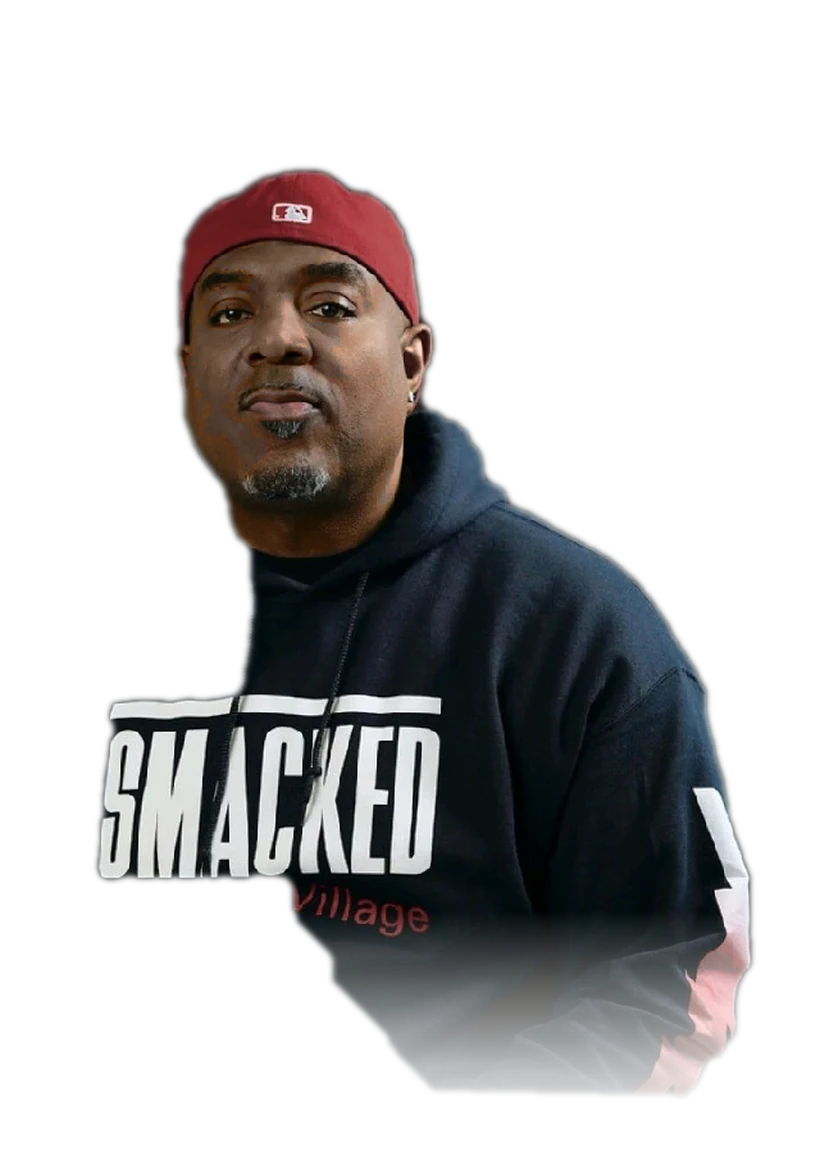
When I was younger, selling marijuana was part of the economy I had access to. In the early ’90s, I was locked up on several occasions for selling marijuana and eventually went to jail for it.
But that wasn’t the end of my story.
I went on to build Advantage Real Estate Group LLC, spending years in real estate, property management, and business operations throughout New York City.
In 2009, I also started, a transitional housing program in the Bronx for men coming home from incarceration.
That’s how I learned what a second chance actually looks like, which is almost never what people think it is.
Then, years later, another opportunity came along.
From Going to Jail for Marijuana to Legally Selling Cannabis
In January 2023, I opened Smacked Village at 144 Bleecker Street, right in the heart of historic Greenwich Village.
Smacked became the second legal adult-use cannabis dispensary to open in New York State and the first owned by someone previously convicted of a cannabis offense.
Think about that.
I went from going to jail for selling marijuana to legally selling cannabis in one of New York City’s most recognizable neighborhoods.
Forbes and The New York Times wrote articles about my story.
I was presented as proof of what New York’s social equity cannabis program was supposed to accomplish.
And at the time, I believed in that opportunity.
That day was proof of the state’s commitment.
But here’s the part that doesn’t make the press release.
What Could Go Wrong? Apparently, Everything.
The state wanted stores open, and fast. There was pressure to get the new legal market operating, and I was among the early CAURD license holders who opened through a temporary pop-up arrangement instead of waiting for the final buildout to be completed.
That one decision came with costs I could never have imagined.
What began as an opportunity to build generational wealth became a financial challenge far more complicated than I had anticipated.
The financing obligations, repayment terms, operating expenses, and costs of opening the business were unlike anything I had dealt with before.
Then came the day-to-day realities.
Internal operational problems involved staff I hadn’t personally hired.
Subcontractors presented as experts.
Product vendors tried to establish themselves and recover their investments in this new industry.
Everybody had expectations tied to the success of the new cannabis retailers opening in the heart of New York City.
And there I was, trying to operate a business in an industry that was still figuring itself out.
What could go wrong?
Apparently, just about everything.
There were disputes over websites, events, security services, staffing arrangements, professional fees, and other business obligations.
Some turned into lawsuits.
At times, it felt like getting sued was becoming a rite of passage.
All of this was happening while we dealt with interruptions to business operations, financial pressures, vendor obligations, and the loss of employees we had invested time and money training.
Then there were the defaults, the lawsuits, the illicit market, cash-on-delivery restrictions, and the biggest challenge of them all:
TAXES.
But those are stories for another day.
The important part isn’t simply what happened.
It’s what I learned from it.
Why I Started Roland Conner Advisory Group
I want to be clear about something.
I didn’t start this business advisory company because I was successful.
And I didn’t start it because I failed.
Success and failure are two sides of the same coin.
I started RCAG because of what both taught me about opportunities.
The opportunity was real.
The license was real.
The location was real.
The demand was real.
All of it.
And I wasn’t new to business. I had years of experience building and operating businesses before I entered cannabis.
But this was a new industry.
And there were things I didn’t know that I didn’t know.
Then I started asking myself a question.
How did I get here?
And that’s when things began to make sense.
Nobody Had Ever Started a Business Quite Like This Before
I’m not just talking about opening a cannabis dispensary in New York.
I’m talking about how this entire opportunity came together.
The idea of legally selling cannabis in New York State started long before I received a license or had a location.
There were laws being written.
Rules and regulations being developed.
Government agencies creating programs.
Financing structures being established.
Multi-State Operators. Registered Organizations. Growers. Manufacturers. Distributors.
All kinds of businesses and organizations were positioning themselves to participate in the new industry.
Then there was the Office of Cannabis Management, DASNY, and the Social Equity Cannabis Investment Fund.
These organizations and industry participants had been developing their respective roles long before I entered the picture.
By the time I received my license, many of the structures, arrangements, and decisions that would shape my business experience were already in motion.
I was entering a business environment that had been taking shape long before I even knew what questions I needed to ask.
And my situation was especially unusual.
I became the first CAURD license holder to open in a state-developed retail location in the heart of New York City’s historic Greenwich Village, under a program designed to create opportunities for people impacted by cannabis prohibition.
That was extraordinary.
But so were the responsibilities and challenges that came with it.
Who Was Looking at the Whole Picture?
Looking back, I began asking myself questions I wish I had asked much earlier.
- Who evaluated what a rushed opening would actually cost?
- Who examined whether the financing obligations matched what the business could realistically afford?
- Who reviewed the major contracts from the business owner’s perspective?
- Who looked at the operating expenses, staffing requirements, inventory costs, and financial projections together?
- Who made sure the right professionals were involved before major commitments were made?
And most importantly:
Who was in the room whose job it was to say, “Wait a minute. Before we move forward, let’s make sure we understand what we’re getting into”?
That’s what I realized I needed.
Not simply another person who specialized in one area.
I needed someone who could look at the entire situation.
Someone who could identify what was missing.
Someone who could help determine what needed to happen first.
And someone who knew which professionals needed to be involved, in what order, and before decisions became expensive.
I had people around me.
But having people around you doesn’t necessarily mean you have the right people looking at the right problems.
That’s a lesson I won’t forget.
An Extraordinary Path. Extraordinary Lessons.
This wasn’t the usual way to start a business.
It wasn’t ordinary.
It was extraordinary, to say the least.
The opportunity was extraordinary.
The circumstances were extraordinary.
The challenges were extraordinary.
And the lessons were extraordinary.
This was my path, and in many ways, it still is.
I continue to learn from the experience and carry those lessons with me.
One of the biggest lessons is simple:
Opportunity doesn’t equal know-how.
You can receive an opportunity without fully understanding everything required to make it successful.
You can have years of business experience and still encounter circumstances you’ve never faced before.
You can hire professionals without knowing whether they’re the right people for the situation.
You can secure financing without fully understanding how the obligations will affect your business.
You can have customers and generate revenue while still struggling to maintain a financially healthy operation.
And you can make a decision today that becomes a very expensive problem tomorrow.
That’s why I say:
A license gives you permission. Permission doesn’t mean you know how.
And that principle applies to much more than cannabis.
What I Want RCAG to Be
I don’t think an entrepreneur has to know everything.
But you do have to recognize what you don’t know, find the people who do know it, and get them involved before a mistake becomes expensive.
Looking back, I didn’t need one more adviser who knew one thing.
I needed someone who could help me understand what was actually happening, what was about to become a problem, and which specialists needed to be involved.
That’s what I’m building through Roland Conner Advisory Group LLC.
RCAG is about helping business owners ask the questions they may not know to ask.
Understanding what’s really going on.
Figuring out what needs to happen first.
Finding the right professionals.
And helping bring the knowledge, people, and resources together to address the problem.
We don’t pretend to know everything.
We choose professionals because we know they can help solve your problem, the same way they help us solve ours.
The goal isn’t to make an entrepreneur dependent on RCAG.
It’s to help business owners make better-informed decisions and become better equipped to manage their businesses.
That’s what RCAG is.
And it’s the kind of organization I wish I had when I needed it.
Everything I know about this, I learned by paying for it.
Roland Conner
Founder & Principal
Roland Conner Advisory Group LLC
Operator-Led Strategy · Expert-Driven Solutions.
Roland Conner
- Founder & Principal, RCAG
- Leads all client engagements and the qualification of the professional network.
- Founder, Smacked
- 144 Bleecker Street, Manhattan. Opened January 2023 under CAURD license 23-000002. The second legal cannabis dispensary in New York State and the first owned by a justice-impacted individual. A family operation.
- Founder, Project First Step
- Founded 2009. A transitional housing program in the Bronx supporting men returning from incarceration and working toward stability and independence.
- Interim Government Affairs Officer, C.A.U.R.D. Inc.
- Board role at the member organization founded by New York's first conditional adult-use retail licensees, representing more than 280 dispensaries across the state. RCAG does not speak for the association, and the role is not a client channel.
- Prior operating experience
- Roughly fifteen years running property management and related businesses in New York City.
- Recognition
- Named to the Forbes Cannabis 42.0 list in 2023.
What people ask before they get in touch
Start with what’s actually happening
It starts with a questionnaire, not a pitch. Twelve questions about your business, your situation, and what would count as a win.